
Credit: Shutterstock
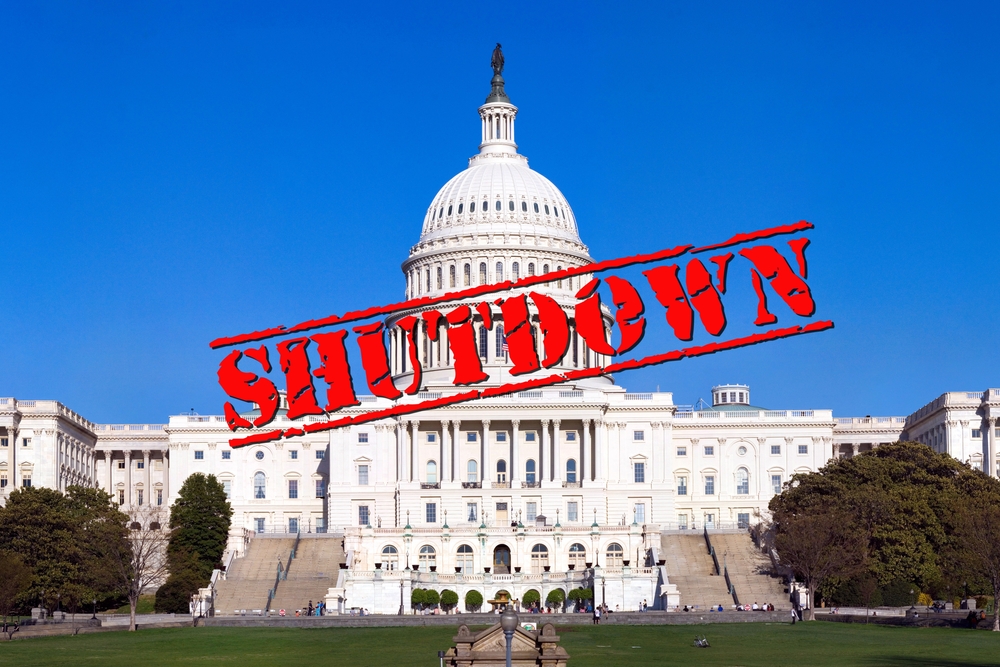
A prolonged government shutdown could slow payments to doctors and add uncertainty for millions who depend on Medicare, Medicaid, and the Affordable Care Act.
For most Americans, a trip to the doctor isn’t just about health—it’s about peace of mind. That’s why the idea of a government shutdown feels so unsettling, especially for the millions of people who rely on Medicare, Medicaid, or Affordable Care Act (ACA) coverage. While the lights at your doctor’s office won’t immediately go dark, a long shutdown could cause ripple effects that may eventually hit patients where it hurts.
What happens right away?
If you’re on Medicare or Medicaid, your benefits will continue during a shutdown. That means you can still go to your appointments, fill prescriptions, and access covered services. The Centers for Medicare & Medicaid Services (CMS) has funding in place to keep operations running smoothly through the end of this year.
So, for now, it’s business as usual.
Where things could get bumpy
The real concern comes if the shutdown drags on for weeks—or even months. Doctors and hospitals rely on timely payments from Medicare and Medicaid to keep their practices running. If payment processing slows down due to staffing shortages at the Department of Health and Human Services (which is furloughing more than 40% of its employees), providers may begin to hesitate.
That hesitation could look like delays in scheduling new appointments—or even rescheduling existing ones—simply because offices can’t risk not getting paid on time. As Jonathan Burks of the Bipartisan Policy Center put it, “The funding is generally there, it’s just a question if the administrative back end is adequate to keep up.”
Community health centers under pressure
Community health centers—lifelines for about 34 million Americans, many in rural and low-income areas—are also watching the situation closely. These centers will likely keep operating during a shutdown, thanks to federal grants and Medicaid support. Still, the uncertainty adds stress to facilities that already depend on patchwork funding extensions to stay afloat.
The bigger health care storm brewing
Even beyond the shutdown, there’s another health care battle ahead: Affordable Care Act premiums. Pandemic-era subsidies that made ACA coverage cheaper (and in some cases free) are set to expire. Without a deal in Congress, millions of Americans could see their premiums more than double within the next few years—from $888 on average in 2025 to nearly $1,904 in 2026, according to KFF.
At the same time, changes tied to earlier legislation could reduce Medicaid rolls by millions. Stricter eligibility checks and new work or education requirements for nondisabled adults are projected to push 7.5 million people out of Medicaid coverage over the next decade.
What this means for you
For now, if you’re covered by Medicare, Medicaid, or the ACA, you don’t need to cancel that doctor’s appointment. But the longer Congress remains gridlocked, the greater the chances of slowdowns, delays, and higher costs in the future.
The bottom line? The shutdown itself won’t immediately strip away your coverage—but it does add one more layer of uncertainty to an already complicated health care landscape.