
Credit: Shutterstock
Wall Street just watched $2.3 trillion vanish from the world’s biggest tech companies in a single month.
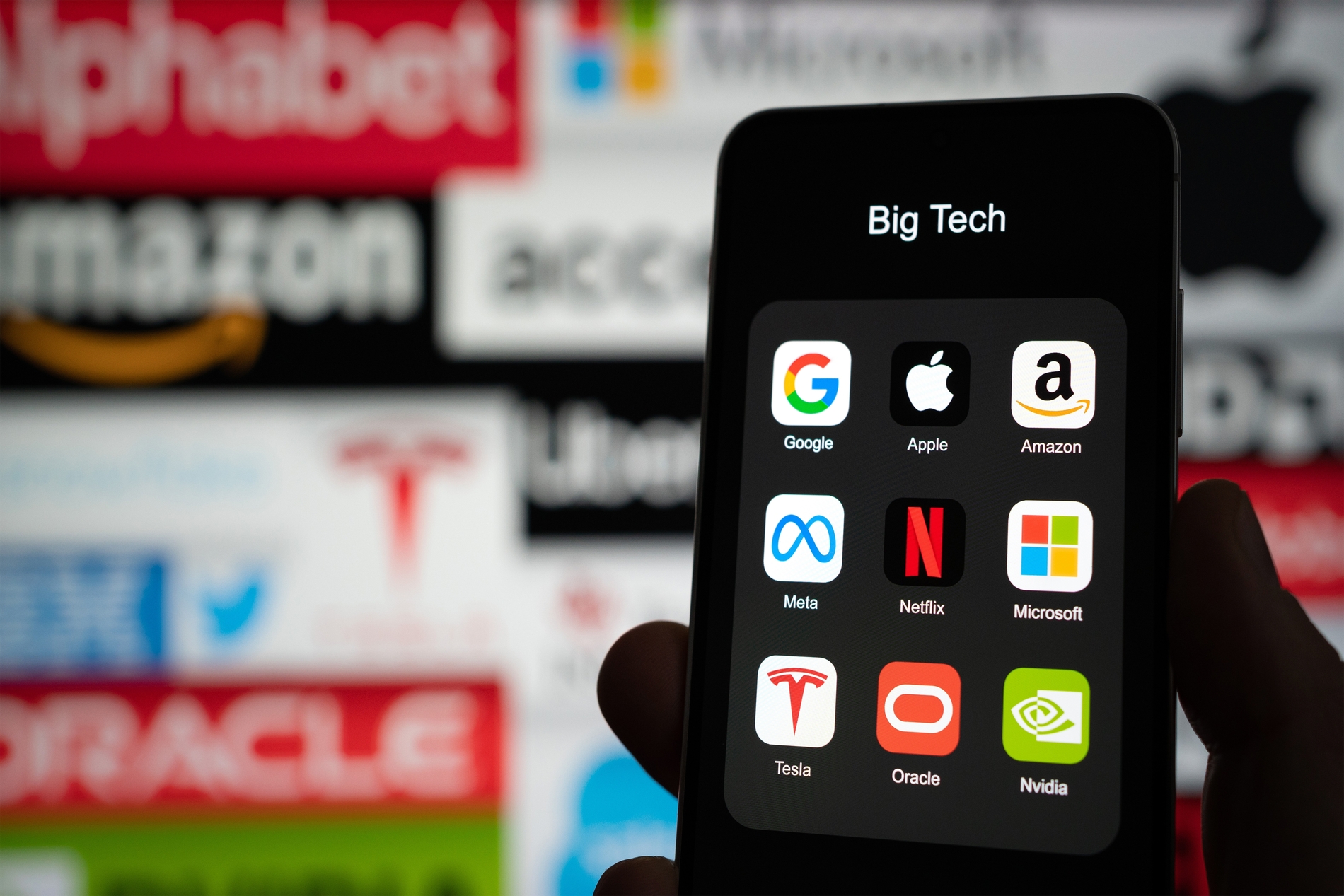
After more than two years of rewarding the largest technology companies regardless of cost, investors are becoming selective. During June 2026, the combined market value of the so-called Magnificent Seven, consisting of Apple, Microsoft, Nvidia, Amazon, Alphabet, Meta, and Tesla, fell by $2.3 trillion.
The decline did not arrive because investors suddenly doubted technology. It arrived because they have started asking when the hundreds of billions of dollars these companies are pouring into AI, chips, data centers, and power infrastructure will turn into profit.
The market is focusing on returns instead of spending
Microsoft, Amazon, Alphabet, and Meta are expected to spend nearly $725 billion on AI-related capital expenditure during 2026, up sharply from $410 billion a year earlier. Goldman Sachs estimates cumulative spending by the largest hyperscalers could reach $5.3 trillion by 2030 as the race to build AI infrastructure accelerates.
Those investments are beginning to reshape company finances.
Amazon’s trailing 12-month free cash flow has reportedly fallen from $26 billion to $1.2 billion, despite continued growth in operating cash flow, as spending on AI data centers surged.
Alphabet became the starkest example of investor nerves this month. On a single trading day in late June, the company lost roughly $225 billion in market value, one of the largest one-day wipeouts on record for a company of its size, after its shares fell around 5%. The drop followed a wave of senior AI talent departures, including a Gemini co-lead who left for OpenAI and a Nobel Prize-winning DeepMind researcher who departed for Anthropic, alongside investor unease over Alphabet’s planned AI spending for the year, which some reports place between $180 billion and $190 billion.
Tom Lee, head of research at Fundstrat Global Advisors, described the shift as a fundamental change in how investors value these companies. Instead of asset-light businesses producing abundant cash, many of the largest technology firms are becoming balance sheet-intensive companies investing heavily to build long-term AI infrastructure.
Investors remain confident in the companies supplying chips
While the biggest AI spenders have struggled, semiconductor companies providing AI chips to them continue to benefit from strong investor demand.
The Philadelphia Semiconductor Index has gained 6% during June even as the Magnificent Seven index suffered double-digit declines, reflecting confidence that demand for AI hardware remains exceptionally strong.
The logic is straightforward. Every advanced AI model requires enormous amounts of computing power, memory, networking equipment, and semiconductor manufacturing capacity. Regardless of which AI platform ultimately dominates, demand for those components continues to grow.
Companies involved throughout the semiconductor supply chain, including GPU designers, memory manufacturers, foundries, and equipment suppliers, continue to benefit from expanding AI infrastructure investment.
Memory prices have surged so sharply this year that the cost pressure has started showing up in consumer products. Apple has raised prices on MacBooks and iPads by almost 20%, and Microsoft has increased Xbox console prices while warning that memory component costs could double again by the end of 2027.
Wall Street is choosing the “picks and shovels”
The growing divide reflects a classic investment strategy.
Rather than betting on which AI models will generate the highest returns, many investors prefer owning the companies selling the hardware required by every AI developer.
Strategas founder Jason DeSena Trennert noted that technology executives face greater competitive risk from underinvesting in AI than from overspending. Investors, however, are increasingly distinguishing between those writing the checks and those collecting them.
That has made semiconductor manufacturers and equipment suppliers the “picks and shovels” of the AI boom, offering exposure to AI growth without relying on any single company’s software or business model succeeding.
This is a recalibration, not the end of the AI boom
Few analysts believe the recent selloff marks the end of the AI investment cycle.
Most major technology companies continue to reaffirm their AI spending plans, arguing that reducing investment today could leave them at a competitive disadvantage for years to come.
Analysts at UBS recently argued that AI remains one of the strongest long-term drivers of market growth, while emphasizing that investors are becoming more selective and increasingly focused on companies capable of converting massive capital expenditure into sustainable earnings.
That appears to be the message from markets today. Wall Street is no longer rewarding AI spending for its own sake. Investors still believe in artificial intelligence, but they now want evidence that the enormous investments being made today will translate into durable profits tomorrow.
For now, that distinction is creating two clear winners and losers within the AI economy. The Mag 7 funding the infrastructure buildout face mounting pressure to justify their spending, while the semiconductor and equipment companies supplying that buildout continue to enjoy strong investor confidence.

