
Credit: Shutterstock
More than 2/3 of BNPL users say the loans cause them to overspend.
The buy now, pay later option is now built into most major online checkouts. Klarna, Afterpay, Affirm, and PayPal Pay Later appear right alongside your debit card option, and they all offer to split the bill into smaller payments.
For millions of Americans, that offer is hard to decline. By 2026, roughly 91.5 million Americans are actively using BNPL services, and the service now accounts for approximately 6% of all U.S. e-commerce.
The problem is not that BNPL exists. The problem is how people use it and what it does to their finances over time.
What BNPL Actually Is
BNPL comes in two main forms:
- The first is the “pay-in-four” model. You pay 25% upfront and split the remaining balance into three equal payments due every two weeks. Most of these plans charge no interest on the purchase itself, which is the core selling point.
- The second form is a longer-term installment loan, offered by BNPL providers like Affirm. These can extend from several months to over a year, and many charge interest. Once you move beyond the basic pay-in-four structure, you are taking out an interest-bearing loan, even if the checkout screen does not phrase it that way.
Both types can charge late fees if you miss a payment. The exact fee varies by the company, but the CFPB confirms that most BNPL products include them.
What BNPL Does to Your Spending
The most measurable cost of BNPL is the late fee. The less obvious cost is how the service affects your purchasing decisions and facilitates overborrowing. Breaking a purchase into installments does not make it cheaper. It makes it feel cheaper, and that difference is exactly what the service is built on.
Research published in the journal Management Science in 2024, which tracked new BNPL users over time, found that they experienced rapid increases in bank overdraft charges and credit card interest compared to consumers who did not use BNPL.
The mechanism behind this is well-documented. BNPL reduces what behavioral economists call “Payment Salience,” meaning your awareness of what a purchase actually costs. When a $200 item splits into four payments of $50, the full price looks affordable.
A 2025-2026 systematic review of peer-reviewed studies found that BNPL features, including deferred payments, perceived affordability, and urgency cues, are consistent predictors of greater impulse purchasing. In a March 2026 LendingTree survey, 68% of BNPL users agreed that using BNPL causes them to overspend.
The Loan Stacking Problem
One of the most significant risks is how quickly BNPL loans accumulate.
The CFPB studied data from six major BNPL providers, including Affirm, Afterpay, Klarna, PayPal, Sezzle, and Zip, and found that 66% of users carry multiple BNPL loans at the same time.
The CFPB also found that BNPL users carry more debt overall than comparable non-users, averaging $453 more in personal loan balances and $871 more in credit card debt.
The late payment trend is also worsening. According to LendingTree’s March 2026 data, 47% of BNPL users paid late at least once in the previous 12 months. That figure was 41% in 2025 and 34% in 2024. Only 38% of users say they have never paid late.
The types of purchases people are financing with BNPL are also shifting. As of 2026, more than half of BNPL users say they would not be able to make ends meet without these loans. 1/3 Americans now use BNPL to pay for groceries and household supplies at least a few times a year. Among Gen Z, that figure is nearly 1/2.
The Credit Score Complication
For most of BNPL’s history, these loans existed as what regulators now call “Phantom Debt.” Because most providers did not report to credit bureaus, the loans were invisible on credit reports. A borrower could be actively managing five BNPL loans and appear debt-free on a mortgage application.
That is starting to change. In February 2025, FICO announced it had developed new scoring models that incorporate BNPL data, and the rollout began in fall 2025. Affirm and Klarna have begun reporting to Experian and TransUnion, though not all providers report, so the credit impact currently depends on which service you use.
The practical consequence is that BNPL is no longer consequence-free from a credit standpoint. On-time payments from reporting providers may help your score. Late payments will hurt it, and those late payments are now being made at nearly twice the rate seen just two years ago.
There is also a consumer protection gap worth knowing about. BNPL return and dispute processes have historically been harder to navigate than those for credit cards, which carry established federal protections under the Truth in Lending Act. The CFPB attempted to extend those protections to BNPL providers in 2024, but the rule was not enforced. If you need to dispute a charge or process a return, BNPL gives you fewer reliable protections than a credit card.
How to Know If You Can Actually Afford Something
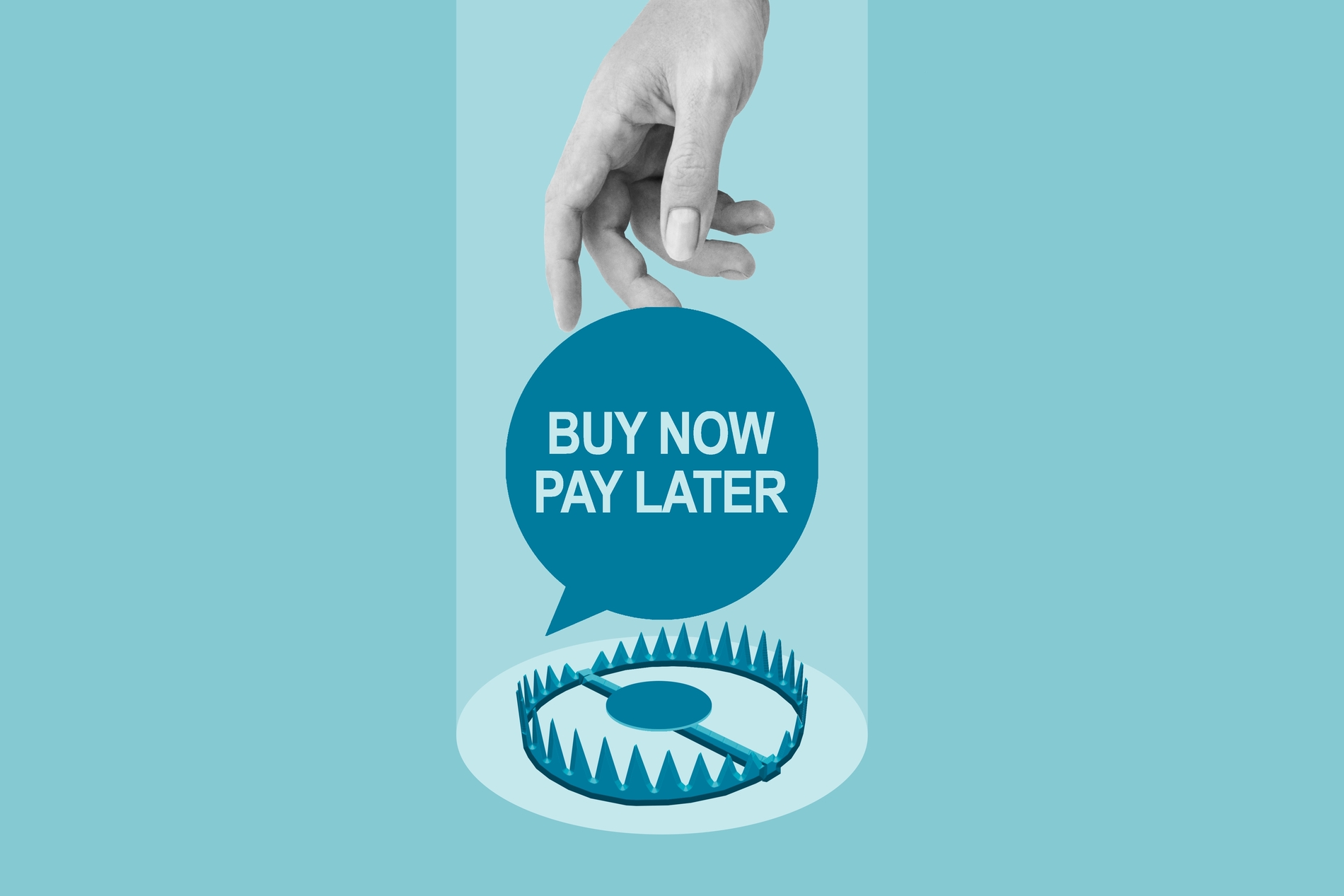
BNPL shifts your focus from “Can I afford this?” to “Can I afford this payment this month?” This is a honey trap.
Before your next purchase, ask yourself:
- Can you pay for it in full without touching your emergency fund? If yes, you can probably afford it.
- Would paying for it require cutting something essential from your budget this month? If yes, you likely cannot afford it right now.
- Would you still buy it if no payment plan were available? If the answer is no, the installment plan is the only thing making the purchase feel possible.
- Are you already carrying other BNPL loans? If so, adding another means more automatic payments drawing from the same income.
A 48-hour waiting period for any non-essential purchase above your own defined threshold is one of the most effective spending filters. If you still want the item two days later and can pay for it outright, you are in a much better position to buy it. If you have moved on, the urgency felt unnecessary.
Practical Ways to Afford What You Want
If you can’t afford something right now, a sinking fund can be a better option than BNPL.
First, figure out how much the item costs and when you want to buy it. Then divide the cost by the number of months you have.
For example, if you want to buy a $600 item in four months, save $150 each month. After four months, you’ll have the full $600 ready to pay in cash. There’s no interest, no late fees, and no automatic payments taking money from your account.
You can keep your sinking fund in a high-yield savings account so your money can earn some interest while you save. Keeping it separate from your everyday spending money can also make it easier to avoid spending it on something else.
Two additional strategies are worth considering:
First, look for expenses you can cut. Check your budget for things you don’t really need, such as unused subscriptions and frequent convenience purchases. Cutting back could free up $50 to $150 a month to put toward your goal.
Second, consider a 0% APR credit card offer if you have good credit and the purchase is genuinely urgent. Unlike BNPL, credit cards are reported to credit bureaus, appear on your credit report, and come with established consumer protections. If you pay the balance in full before the promotional period ends, you may pay no interest.
Final Words
BNPL is not predatory by definition. For someone who has already budgeted for a purchase and prefers to manage their cash flow across a few weeks, the service may have no negative effect at all.
But the actual usage data says something else. More than half of BNPL users say they could not afford the purchase without the payment plan. Nearly half paid late at some point in the past year. These don’t reflect strategic use.
The payment plan makes a purchase feel achievable. That is a different thing from the purchase actually being affordable. Knowing the difference, before you tap “pay later” at checkout, is the most useful financial skill BNPL rarely encourages you to develop.
