
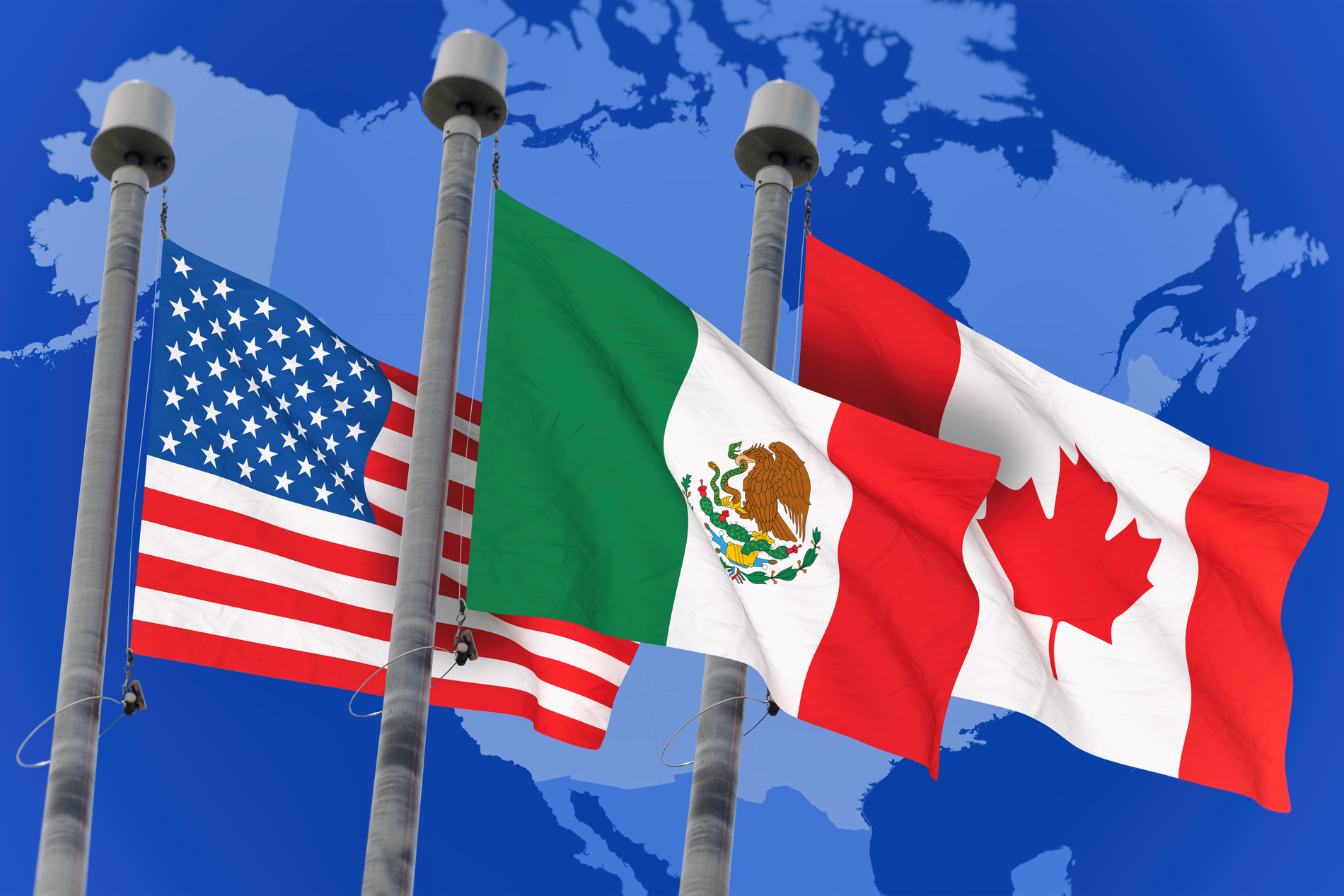
Credit: Shutterstock
Canada spent months out of trade talks. Now, as the deadline approaches, it is using Donald Trump’s own words to try to get back in.
Here is how Canada ended up in this position.
The United States-Mexico-Canada Agreement, known as USMCA, has a built-in review date of July 1, 2026. Under the deal’s terms, all three countries must agree by that date to extend it for 16 more years. If they do not all agree, the deal stays in place but enters a cycle of rolling annual reviews, with the possibility of expiry in 2036 if no country confirms it.
The three countries do nearly $2 trillion in trade with each other every year. Goods that meet USMCA rules have largely been exempt from Trump’s tariffs, which makes the deal especially important for Canada and Mexico.
Trump suspended all trade talks with Canada in October 2025. The reason was Ontario’s provincial government aired an advertisement featuring clips of former US President Ronald Reagan warning that tariffs cause trade wars. Washington saw it as a provocation, and talks collapsed.
Canada had tried making concessions before to get Trump back to the table. It canceled a planned digital services tax on US tech companies in June 2025 as a goodwill gesture. Trump still halted talks again in October.
While Canada sat on the sidelines, Mexico moved fast. Mexico and the US held their first formal USMCA negotiating round on May 29 in Mexico City. A second round is scheduled for June 16 in Washington. Mexico’s Economy Minister Marcelo Ebrard openly called on Canada to join the talks.
Canada’s absence was noticed. Businesses criticized Canada for being slow to engage with the USMCA review process, while Mexico was seen as proactively working with the US administration.
Under pressure, Canadian Prime Minister Mark Carney sharply changed his tone. Speaking at the Economic Club of New York on May 28, Carney said “Canada Strong will help Make America Great Again,” directly borrowing Trump’s campaign slogan. He stressed Canada’s importance to the US economy and urged closer cooperation ahead of the July 1 deadline.
He framed Canadian aluminum exports to the US as “the energy equivalent of 10 Hoover Dams,” arguing it made little sense for the US to try to build that capacity on its own. He called the North American market “the best and most durable way to confront” intense global competition.
Carney also put forward a concept he called “Fortress North America.” Under this idea, Canada said it was open to deeper integration with the US and Mexico in selected sectors, including autos, steel, and critical minerals. But Carney also warned that if that route was not possible, Canada would invest heavily in new markets.
Canada sent negotiators to Washington in early June. Carney said his team made “some progress” during talks in Washington around June 3, but stressed there was “lots more to do” to reach any overall agreement.
Cabinet minister Dominic LeBlanc, who is responsible for Canada-US trade, said Canada made new, detailed proposals to the US but declined to share specifics. He also warned that “turbulence” was still possible and that “the road to conclusions in these conversations is sometimes not a straight line.”
Carney tried to downplay Canada’s slower start compared to Mexico. He told reporters the US has roughly 60 outstanding issues with Mexico under USMCA, about double the number it has with Canada.
The July 1 date is not a cliff edge. Under Article 34.7 of the USMCA, it is the point at which the clock either resets or begins to run down. If all three parties do not renew the deal, USMCA enters annual reviews and, if unresolved, expires in 2036.
Officials close to the process now say the rolling review is the most likely outcome. The US also appears to prefer bilateral talks and separate side deals with Canada and Mexico rather than a formal renewal of the full agreement.
Missing the July 1 milestone could lead to months or even years of haggling over rules and tariffs for autos and other industries.
Critics at home point out that Carney is walking a contradiction. On one hand, he is adopting Trump’s trade language to stay inside the North American deal. On the other hand, he has staked Canada’s long-term future on building new trade ties with Europe, the UK, and Asia. Those negotiations will require Canada to argue for open, rules-based trade, which is the opposite of what “Fortress North America” stands for.
Canada may win the short-term battle of getting back into the USMCA talks. Whether it can do that without weakening its position everywhere else is a harder question.
