
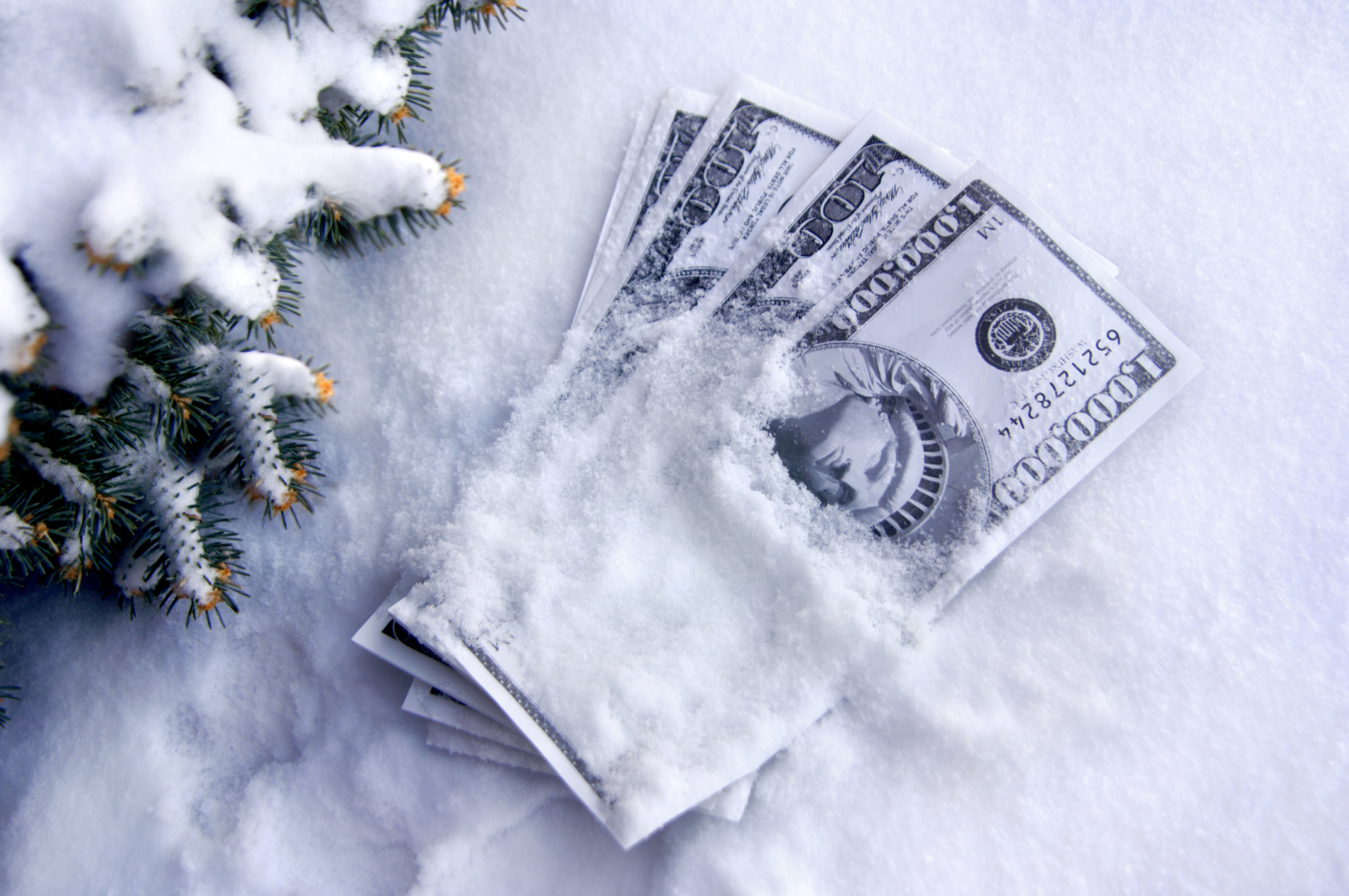
Credit: Shutterstock
A financial winter can brutally test every part of your money plan.
Good times do not last forever. Neither do difficult ones. You may lose a job, see your income fall, face a large unexpected expense, deal with rising living costs, or watch your investments decline. Sometimes several of these problems arrive at once, and it is called “financial winter”.
The goal during such a period is not necessarily to grow your wealth. Your first job is to protect your financial foundation, stay flexible, avoid expensive mistakes, and position yourself to recover.
Nature offers a useful way to think about financial resilience:
Store. Preserve. Bend. Endure. Regrow.
Here is how to apply those five principles to your money.
1. Prepare: Store resources before you need them
Squirrels store before winter, not after food becomes scarce. They build reserves beforehand. Your financial equivalent is an emergency fund.
An emergency fund is money reserved for unexpected expenses or a sudden loss of income. It can keep a car repair, medical expense, home repair, or job loss from immediately turning into expensive debt.
You should keep emergency money somewhere safe and accessible, generally in a liquid account where you can access it without taking significant investment risk or paying large penalties.
The exact amount depends on your circumstances, but many people use three to six months of essential expenses as a longer-term emergency fund target.
Do not let that target discourage you if you are starting from zero. Start with an amount you can realistically build. Then increase it over time.
The lesson: Build reserves while you have the ability to build them.
2. Conserve: Protect the resources that matter most
When conditions become difficult, nature becomes efficient. Bears reduce energy use in winter. Your finances should do the same.
If income falls or expenses suddenly increase, do not start by randomly cutting everything. Build a temporary financial winter budget.
Separate spending into three groups:
- Essential: Housing, food, utilities, basic transportation, insurance, health needs, childcare, and critical debt obligations.
- Important but adjustable: Phone plans, internet packages, transportation choices, some household purchases, and memberships.
- Optional: Entertainment subscriptions, nonessential shopping, expensive upgrades, vacations, and purchases that can safely wait.
Start at the bottom and work upward.
Look at the consequences of not paying a bill when money is too tight to cover everything. Protecting housing, the ability to work, necessary insurance, utilities, and legally required obligations may be more urgent than responding to whichever creditor is making the most noise.
If you know you cannot make a payment, don’t ignore it. Contact the lender, card issuer, landlord, utility provider, or other company as early as possible and ask what options you have.
You may be able to:
- Change a payment date
- Arrange a payment plan
- Request temporary hardship assistance
- Ask for a late fee to be waived
- Move to a cheaper service plan
The lesson: Conservation does not mean cutting everything. It means protecting what matters most and stopping unnecessary financial leakage.
3. Adapt: Build a flexible financial life
Bamboo survives strong winds partly because it can bend instead of remaining completely rigid. Your finances also become stronger when you have room to adjust.
A household that needs every dollar of normal income to meet fixed bills has little flexibility when circumstances change.
Reduce unnecessary fixed commitments. Review expenses that lock you into monthly payments. You may be able to reduce housing costs, vehicle costs, insurance premiums, and mobile and internet plans.
Reducing a $20 discretionary purchase helps once. Reducing a recurring $200 monthly obligation helps every month. Don’t cancel important insurance or other financial protections just to cut expenses. First, consider the risk you would be taking on.
Expense cutting has limits. Eventually, the larger opportunity may be on the income side.
Depending on your circumstances, that might mean:
- Asking for additional shifts or hours
- Updating your résumé before you urgently need another job
- Developing a marketable skill
- Taking temporary or contract work
- Freelancing
- Building professional relationships
- Creating a second source of income
A second income source isn’t guaranteed protection, and a new side business can cost money. Avoid spending heavily to create backup income before you know there is real demand for what you plan to offer.
The lesson: Financial resilience comes partly from having choices.
4. Survive: Endure without creating a bigger problem
If winter has already arrived, survival becomes the priority. Trees endure harsh seasons through strong roots. This is when your preparation should begin working for you.
Use your emergency fund only in a real emergency. People sometimes become so focused on protecting their savings that they are afraid to use them.
If you lose your income or face a necessary unexpected expense, using emergency savings may be better than immediately taking on high-interest debt.
Also, do not confuse a market downturn with an emergency. This distinction is important. A falling stock market does not automatically mean you should sell long-term investments.
If your investment plan, income, and financial goals have not changed, selling assets because prices have fallen can turn a temporary market decline into a permanent loss.
The lesson: Surviving a difficult period means protecting today without unnecessarily damaging tomorrow.
5. Regenerate: Rebuild stronger after the difficult period
Financial winter eventually ends. When income stabilizes, or financial pressure decreases, don’t immediately return to your previous spending patterns.
This is your opportunity to rebuild. If you used emergency savings, begin replenishing them. You may also discover that your old emergency-fund target was too small.
If the crisis forced you to carry credit card balances or take on other high-interest debt, create a clear repayment plan.
Once your essential bills and basic cash reserve are secure, paying down expensive debt can free up future income and reduce the money lost to interest.
As your foundation recovers, refocus on long-term goals. That may include retirement contributions, other investments, education savings, a home purchase, or other financial objectives.
If your employer offers matching retirement contributions, understand how the program works and whether capturing the available match fits your situation.
A financial winter may reveal that your investment portfolio was more aggressive than you could comfortably tolerate.
Do not change your portfolio simply because markets recently fell. Instead, review whether your asset allocation still matches your goals, time horizon, and ability to accept losses.
The lesson: Recovery is not simply returning to where you were. It is fixing the weaknesses that the difficult period revealed.
A Simple Financial Winter Plan
You do not need to predict the next recession, layoff, market decline, or emergency. You need a plan that can handle uncertainty.
- Before financial pressure arrives, build accessible savings and suitable protection.
- When conditions worsen, cut unnecessary spending and protect essential obligations.
- As circumstances change, adjust your costs and income instead of staying locked into an old plan.
- During the worst period, use the resources you prepared and avoid decisions that turn short-term problems into long-term damage.
- When stability returns, rebuild your savings, repair debt, resume long-term investing, and strengthen the parts of your financial plan that failed under pressure.
The progression is simple:
Prepare. Conserve. Adapt. Survive. Regenerate.
You cannot control when every financial winter arrives, but you can control how well prepared you are when it does.
